As every experienced language learner knows, the first steps in linguistic study involve grasping the grammar, syntax, and sentence structure. However, once you understand how sentences are put together, you face the massive additional task of mastering the vocabulary of a language. This is the “hard part” of learning non-European languages like Arabic, Chinese, and Japanese, where the lack of cognates means you must learn every word on a “clean slate”.
A Methodical Approach to Mastering Vocabulary
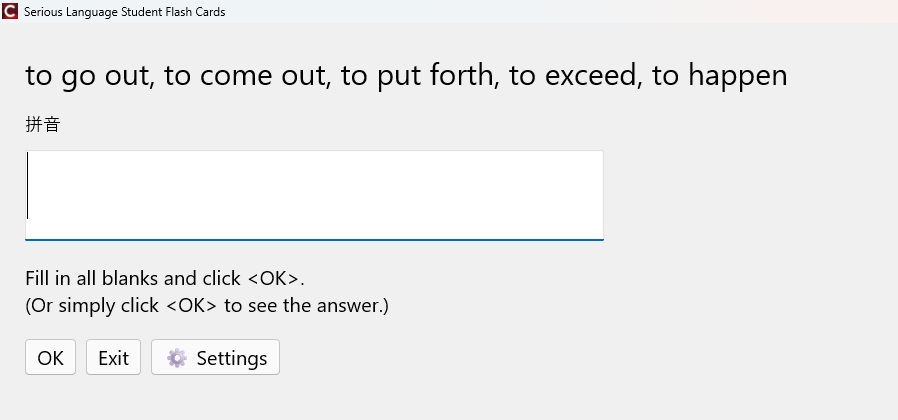
To succeed in mastering the vocabulary of a language, a student needs a comprehensive and rigorous tool. Serious Language Student flashcards provide a methodical introduction to over 1,000 common words (1,100+ for Japanese).
This is not a passive experience; the program is built for active production. Unlike other products, practice is never multiple choice because understanding, speaking, and reading are active tasks, not reactive ones.
Personalized Learning and Science-Backed Progress
The path to acquiring the vocabulary of a language is personalized for every user. The program uses a formula based on research regarding effective learning curves:
- Successful Responses: When you master a word, that card is presented less frequently.
- Targeted Review: If a word is difficult, it appears more often to ensure efficient learning.
Unique Customization for Your Specific Goals
A unique and powerful feature of this system is the ability to add your own vocabulary words to the provided corpus. This allows you to expand the vocabulary of a language you are studying by including interesting words from independent reading or specific terms from a teacher or textbook.
Furthermore, you can override the built-in introduction order to perfectly align your practice with a specific curriculum. If you are preparing for a test, you can use “quiz mode” (frozen mode) to drill a fixed set of words without expanding your vocabulary further until the exam is over.
Language-Specific Deep Mastery
Mastering the vocabulary of a language requires specialized tools for different linguistic challenges:
- Arabic: Master critical grammar points like feminine markings and broken plurals, and practice reading as it appears in the real world—without voweling—while writing with voweling to ensure perfect pronunciation.
- Chinese: Ensure active character mastery by learning to describe characters using a 2,000-year-old system, and master pīnyīn tones, which are treated as being just as important as consonants or finals.
- Japanese: Master all 1,006 “education kanji” and practice characters with both Kun-yomi and On-yomi readings.
Reliability and Security for the Student
The serious student needs a reliable environment. The program lives entirely on your own device, meaning it works offline and your progress is saved locally. This protects your language records from ever being “lost in the cloud” and ensures you are never affected by internet speeds or forced software upgrades.