The Serious Language Student grammar and vocabulary mastery
The Serious Language Student (SLS) system is specifically designed to address the challenges inherent in acquiring non-European language vocabulary, the scripts or writing systems of those languages and required grammatical information about vocabulary items. Sources identify vocabulary acquisition as the most difficult component of languages like Arabic, Chinese, and Japanese.
The flashcards employ unique, specialized features across the different languages to ensure students achieve active vocabulary mastery, going beyond passive recognition.
1. Addressing Arabic Script and Grammar in Vocabulary Mastery
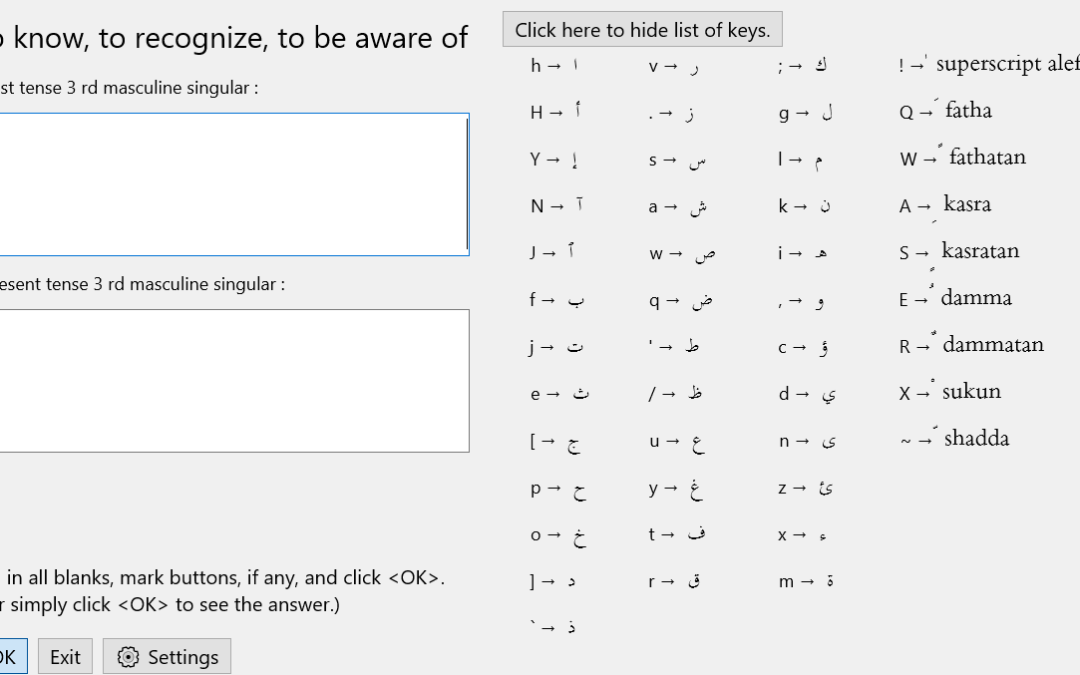
The system includes mastering voweling, which is to say pronunciation. It also ensures that critical grammatical information is integrated into vocabulary mastery:
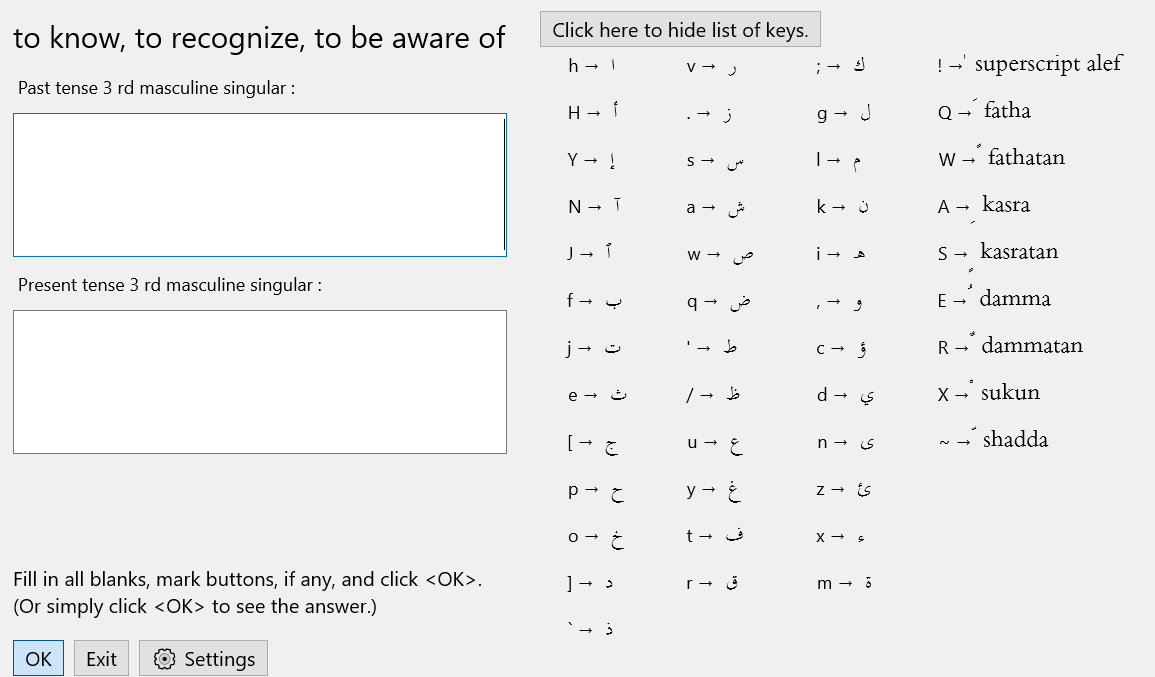
• Reading and Writing Voweling: Users practice reading Arabic vocabulary as it is typically seen in the Arabic-speaking world, which is without voweling. Conversely, users are required to write Arabic vocabulary with voweling, ensuring they know the correct pronunciation for the word.
• Complete Grammatical Information: The flashcards incorporate necessary grammar points needed to master vocabulary. This includes:
◦ Present Tense Vowels of Verbs. Not only does the user need to know that “to know” is ^arafa but also that the present tense is ya^rifu, with middle vowel ‘i’.
◦ Gender Marking: Nouns are specifically marked as must be marked as feminine by the user, when the gender is not obvious, e.g., harb, meaning “war” must be recognized as feminine).
◦ Broken Plurals: Irregular or broken plurals are included in addition to the singular form (e.g., kibar, plural, is included with karib, singular.
2. Addressing Chinese Script and Phonetics for Vocabulary Mastery
For Chinese vocabulary acquisition, the system includes on character knowledge for reading and writing and tone accuracy for speaking and listening.
• Active Character Mastery: The flashcards are designed to ensure students move beyond passive recognition to achieve active character mastery. This means knowing characters well enough to describe them, which generally implies knowing them well enough to write them.
• Systematic Character Description: The program uses the standardized character description system familiar to literate Chinese people and foreign students, analyzing characters by components (e.g., describing 是 (shì) as having the character for 日 (rì) on top plus five additional strokes).
• Mandatory Tones: The tone of a Chinese syllable is treated as essential to the vocabulary item (e.g., distinguishing shí, shì, and shǐ). Whenever Pīnyīn is shown, the tones are included, and users must include the tones when writing Pīnyīn.
• Vocabulary Selection Strategy: The 1,000+ words balance frequency studies with the importance of including radicals (like 刀 ‘knife’ or 禾 ‘standing grain’) which are common components of other characters, facilitating broader vocabulary acquisition.
3. Addressing Japanese Script and Multiple Readings in Vocabulary Mastery
The SLS Japanese system ensures comprehensive vocabulary mastery by requiring proficiency with standard kanji and their readings:
• Mandatory Kanji Set: The vocabulary incorporates all 1,006 “education kanji” (教 育 漢 字) established by the Japanese Ministry of Education.
• Multiple Readings: Characters that have both a common Japanese reading (Kun-yomi) and a common Chinese reading (On-yomi) appear at least twice in the flashcards to illustrate both readings (e.g., 学 appears in both 学ぶ and 大学).
• Script Progression: Words are introduced sequentially, starting with kana (phonetic Japanese) to English, then English to kana, followed by kanji to English and kana, and finally English to kanji and kana.
• Active Character Mastery: The flashcards aim for active character mastery, requiring users to know characters well enough to describe them or write them. The standard system for describing characters is used (e.g., analyzing 桜 ‘cherry’ as 木 ‘tree’ on the left plus six additional strokes).
Overarching Methodologies of The Serious Language Student System
A core feature supporting the acquisition of complex scripts and grammar structures within the vocabulary is the practice methodology:
• No Multiple Choice: Practice is never multiple choice. This design forces the user to actively recall and produce the correct script, tone, or grammatical form associated with the vocabulary item.
• Custom Vocabulary Expansion: Users have the unique ability to add their own vocabulary words to the corpus. This allows them to integrate into the SLS system words encountered in textbooks or independent reading even if those words were not present in the original SLS library. Incorporation of such additional words in seamless, and the new cards appear in practice indistinguishably from the original SLS library.
Serious Language Student flashcards
The provided texts advertise a product called Serious Language Student flashcards, which is a vocabulary learning program specifically targeting non-European languages such as Arabic, Chinese, and Japanese. These flashcard programs emphasize vocabulary acquisition, which the source material identifies as the most difficult component of learning these languages
Serious Language Student Resources
Unicode home page
https://unicode.org/charts/
Uniwriter home page
https://www.unitype.com/globalwriter.php
Wiktionary home page
https://en.wiktionary.org/wiki/Wiktionary:Main_Page
Original Kangxi dictionary page
https://www.kangxizidian.com/
Educational kanji at Wikipedia
https://en.wikipedia.org/wiki/Ky%C5%8Diku_kanji