How is vocabulary repetition frequency personalized?
The vocabulary repetition frequency within the Serious Language Student (SLS) flashcards system is personalized to the individual user’s performance and learning needs.
Here is how the personalization works:
• Performance-Based Adjustment: The program tracks the user’s responses to flashcards.
◦ If the user responds successfully to a flashcard, that card is subsequently presented less frequently.
◦ If the user needs to review a specific card (implying an unsuccessful response), that card is presented more frequently.
• Research-Backed Formula: The specific formula governing how often cards are repeated is based on research on effective learning curves. This ensures that the personalized schedule is optimized for long-term retention and vocabulary mastery.
This personalized frequency management is a key feature contributing to personalized vocabulary progress.
What research basis determines flashcard repetition frequency?
The Serious Language Student (SLS) flashcards use a formula for determining vocabulary repetition frequency that flows from research on effective learning curves.
This research basis is implemented in a personalized way:
• Successful Responses: If a user responds to a flashcard successfully, the frequency with which that card is presented is decreased.
• Review Needed: If the user needs to review a card (indicating difficulty or an incorrect response), the card is presented more frequently.
This system results in personalized vocabulary progress for the user.
What unique ability allows users to expand vocabulary?
The unique ability that allows users to expand their vocabulary within the Serious Language Student (SLS) flashcards system is the capacity to add vocabulary words to the existing corpus.
This ability is appears to be unique to Serious Language Student.
Key details about this feature:
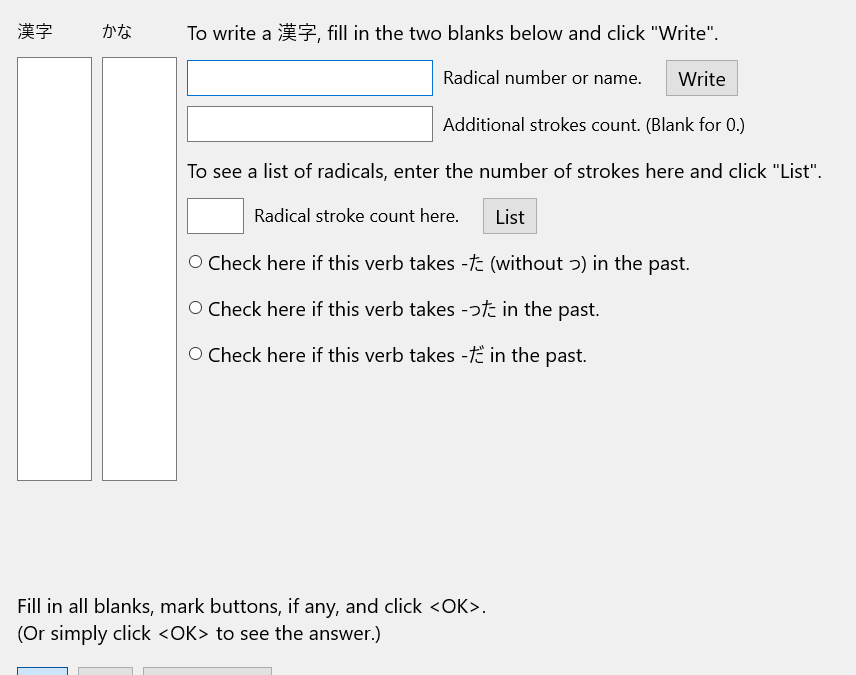
• Expansion Method: Users can add new vocabulary words in addition to the words with which the program comes supplied (1000+ words for Arabic and Chinese, 1100+ for Japanese).
• Source of Words: Users working with a teacher or textbook, as well as users reading on their own, can add new words.
◦ This includes all vocabulary introduced by a specific teacher or textbook.
◦ It also includes interesting words encountered during independent reading.
• Integration: Once added, users then practice those new words as part of the overall Serious Language Student practice and the new cards are in the same format as the cards which the original program is supplied.
Where does the flashcard program live and record progress?
The Serious Language Student flashcard program lives on the user’s device.
Regarding the recording of progress:
• The user’s progress is recorded on one’s device.
• Because the program operates locally, the user is protected from the records ever being “lost in the cloud”.
• Since the program lives on the device, the user does not need to be connected to the Internet to run the program and practice.
• Also,since the program lives on the device, the user is never required to update the program or otherwise modify or reinstall it. However, if a new version appears to the user to be an improvement in programming, that new version can be downloaded and installed at no additional cost. Such downloads are free, i.e., are included in the original license.
Why does the program never use multiple choice practice?
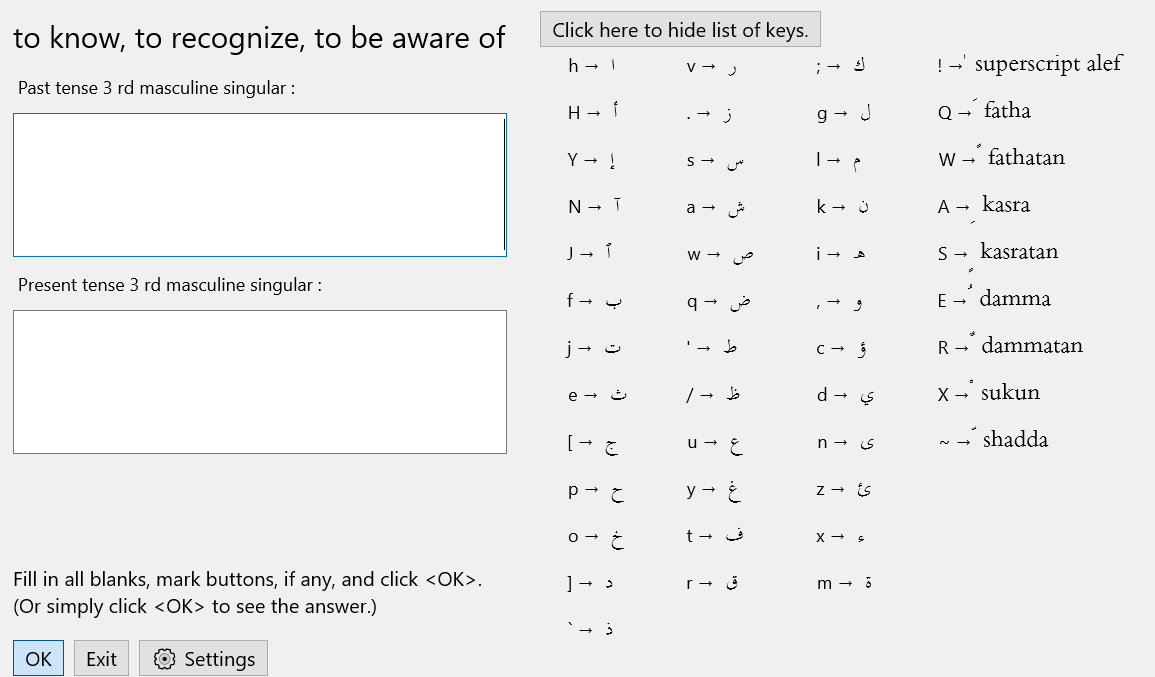
The Serious Language Student (SLS) flashcard program never uses multiple choice practice because, according to the sources, understanding, speaking, and reading the target languages (Arabic, Chinese, and Japanese) are not multiple choice tasks.
By avoiding multiple choice practice, the SLS system requires users to actively produce the answers, promoting active mastery of vocabulary rather than passive recognition. This rigor is a key distinguishing feature of the product.
Serious Language Student flashcards
The provided texts advertise a product called Serious Language Student flashcards, which is a vocabulary learning program specifically targeting non-European languages such as Arabic, Chinese, and Japanese. These flashcard programs emphasize vocabulary acquisition, which the source material identifies as the most difficult component of learning these languages
Serious Language Student Resources
Unicode home page
https://unicode.org/charts/
Uniwriter home page
https://www.unitype.com/globalwriter.php
Wiktionary home page
https://en.wiktionary.org/wiki/Wiktionary:Main_Page
Original Kangxi dictionary page
https://www.kangxizidian.com/
Educational kanji at Wikipedia
https://en.wikipedia.org/wiki/Ky%C5%8Diku_kanji